Case study
Moisture-Linked Insects and Mould in a Sharjah Apartment
Small pale insects inside an apartment, and dark speckling on the ceiling and walls around the AC supply grilles. The two were one problem: moisture. The surfaces were cleaned and treated and the insects dealt with; the duct insulation above the ceiling, which was holding the moisture, was outside our scope and is recorded here for the building.
By Ashiq AbduRahman, Senior Technician. Reviewed .
- Service
- Mould treatment and crawling-insect control
- Property
- Occupied residential apartment, false ceiling over the kitchen and bathroom, ducted split AC
- Location
- an apartment in Al Taawun, Sharjah
The problem
- The occupants were seeing small, pale, soft-bodied insects on walls and ceilings inside the apartment.
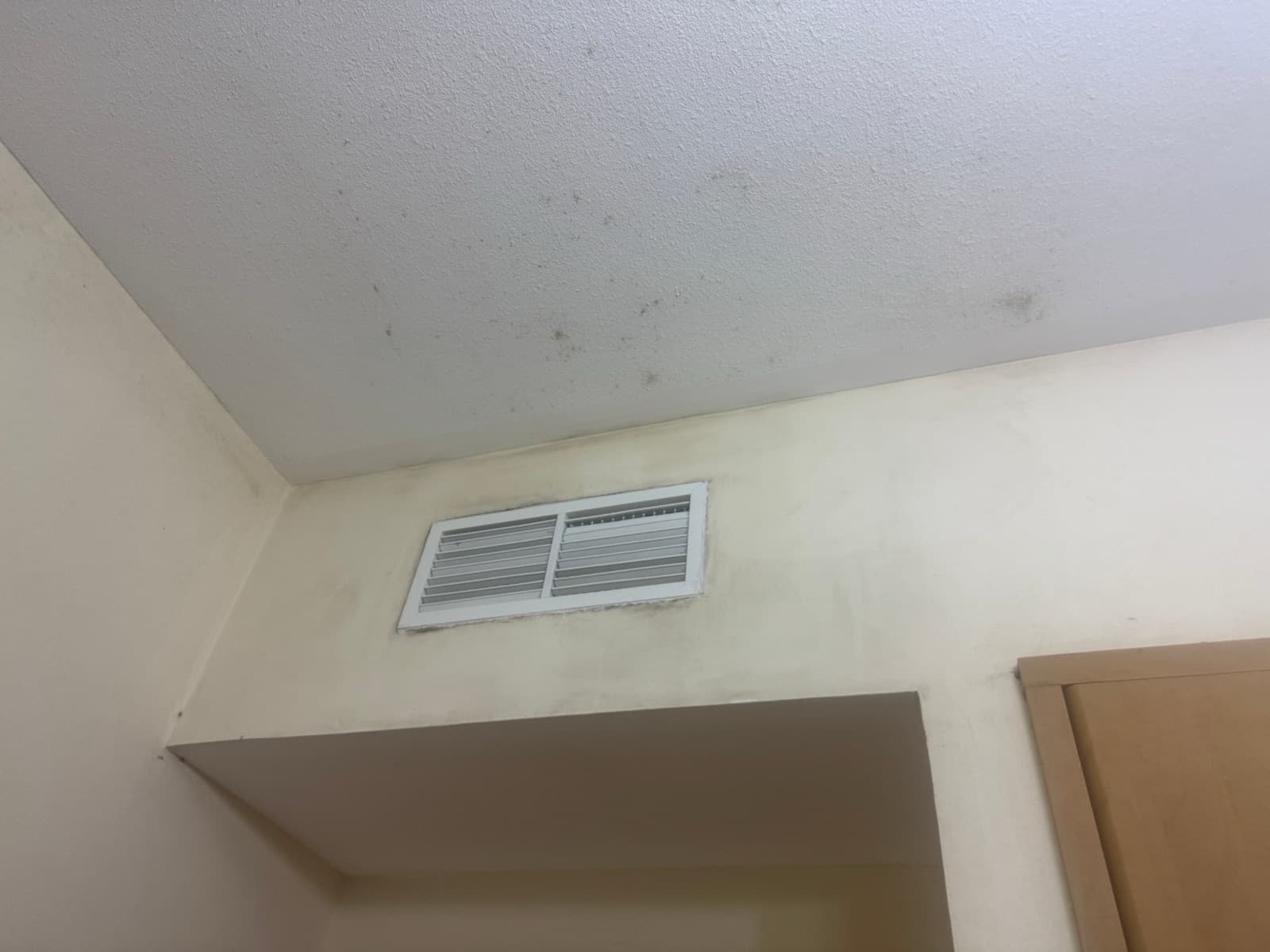
- Dark speckled patches had appeared on the textured ceiling and on the painted walls, concentrated above and around the AC supply grilles, with grey staining on the grille frames and the plaster around them.
What the inspection found
- Growth on the textured ceiling and on the bulkhead above the doorway followed the AC outlets: heaviest within about a metre of each grille, fading with distance. That pattern points at the air handling and its insulation rather than at a leak from above.
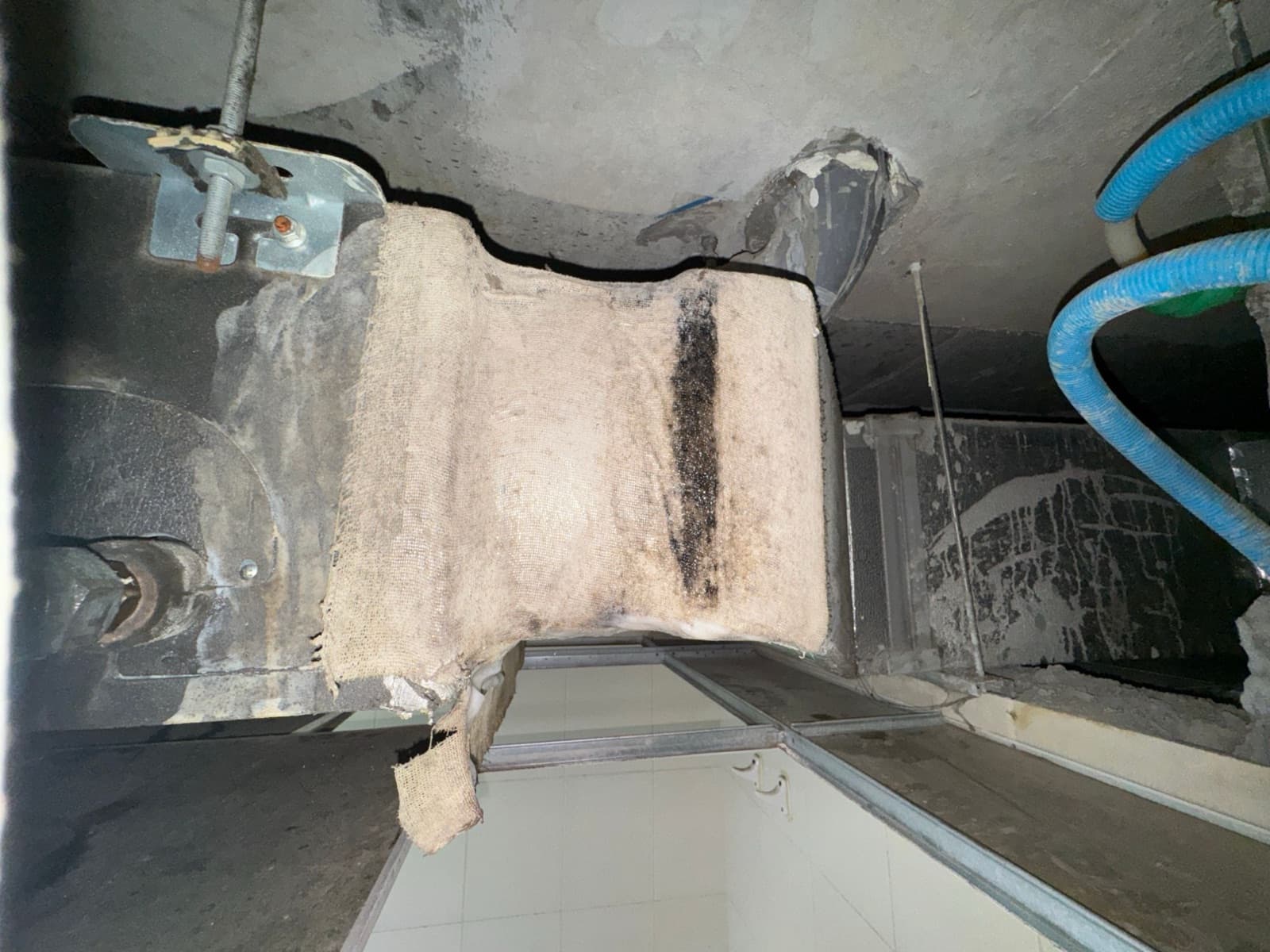
- Lifting the false-ceiling tiles over the kitchen and bathroom showed the cause. The cloth wrap on the duct insulation was stained dark along its seams, the foil-faced insulation was wet with condensation, and one section of wrap had come away from the duct. The blockwork and plaster above the tiles were dusty and damp-marked, and the tiles themselves were spotted on the hidden side.
- The insects were consistent with a psocid, booklouse-type insect. They were not laboratory-identified. Insects of this type feed on the microscopic growth that forms on damp surfaces, which is why they were found where the growth was.
What was in our scope
- Physical cleaning of the affected ceiling, bulkhead and wall surfaces inside the apartment.
- Surface treatment of those areas with a sodium-hypochlorite mould and mildew remover, applied per label.
- Removal of visible insects from the treated surfaces.
- A targeted insecticide application to cracks, corners and harbourage points at the ceiling and wall junctions and around the grille frames.
- A written record of the condition found above the false ceiling, for the building management.
What needed the building's attention
- The duct insulation above the false ceiling: wet, discoloured along its seams and detached in one place. Until it is replaced or resealed, condensation will keep forming on the duct and feeding growth in the ceiling void.
- Condensation on the ductwork itself, which indicates the insulation is no longer doing its job over that run.
- Humidity in the ceiling void over the wet areas. Growth on the hidden side of the tiles will return while the void stays damp.
Treatment, step by step
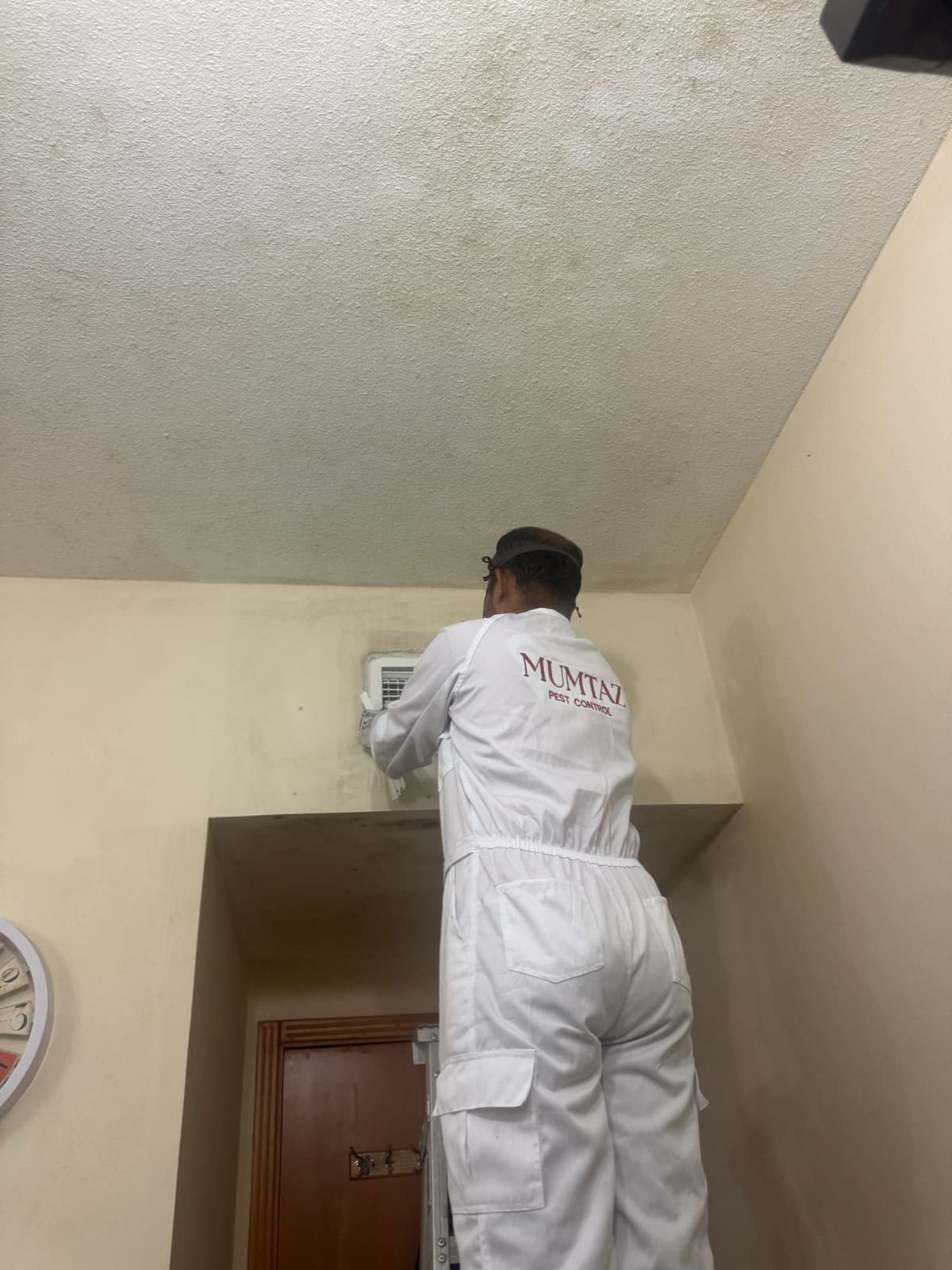
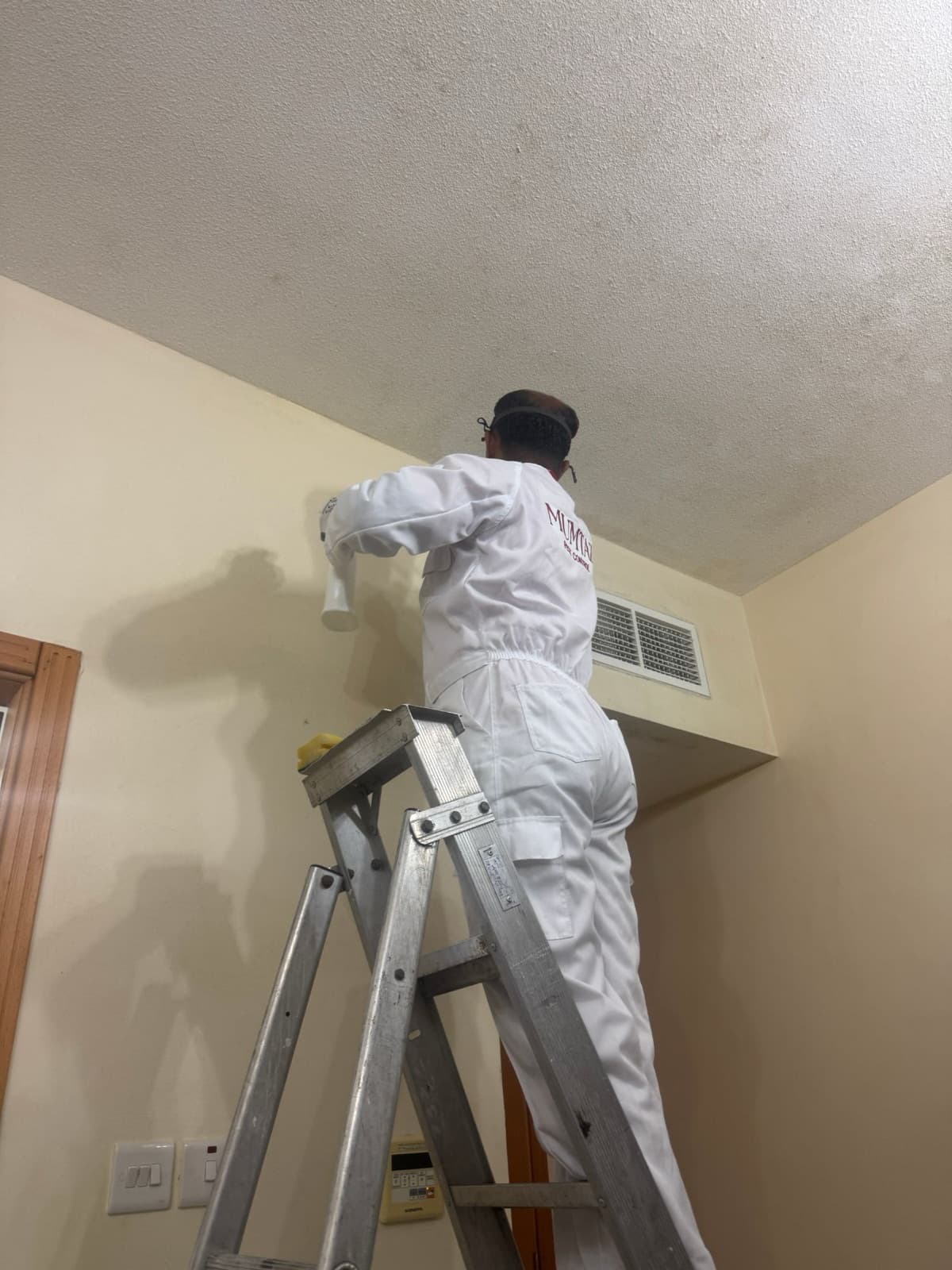
- Access set up: a stepladder inside the apartment, the technician in coveralls, gloves and a half-mask respirator, the occupants asked to keep the treated rooms clear during the work.
- Physical cleaning first: the speckled areas on the ceiling, bulkhead and walls were wiped down with microfibre and sponge to lift loose growth and dust before any product went on. Product applied over loose growth only spreads it.
- Surface treatment: the sodium-hypochlorite remover was applied to the cleaned areas at the label dilution and left for the label contact time, then the surfaces were wiped again.
- Insect removal: visible insects were removed from the treated surfaces as the cleaning went.
- Targeted insecticide: a residual product was applied into cracks, the ceiling-to-wall junction, corners and the gap around each grille frame, the places this type of insect harbours. No blanket spraying of open wall surfaces.
- Not treated: the duct insulation and the ductwork above the false ceiling. These are building services and were recorded and reported rather than treated.
Not treated, and why
- HVAC duct insulation and ductwork above the false ceiling, reported to the building.
- The moisture source itself. Treatment does not stop condensation; only the HVAC repair does.
Why insects may still be seen after treatment
- Mould is an environmental problem before it is a surface problem. We cleaned and treated what was accessible and identified the moisture source behind it; where that source is corrected the treatment holds, and where it is not, growth returns regardless of who treated it. That is why the report names the cause and what the building needs to do, and why the items below are set out rather than left to be discovered.
- Insects of this type live on damp-surface growth. Cleaning and treating the visible surfaces removes the food they were feeding on there, but the ceiling void and the duct insulation still hold moisture and growth until the HVAC items are corrected, so some insects can still move out of the void into the rooms.
- Eggs laid in cracks before the visit are not affected by a surface clean; they hatch in the days after treatment and meet the residual insecticide in the cracks. Sightings in the first weeks are expected to fall away, not to stop on the day of the visit.
- Residual staining stays in the textured ceiling finish and in porous paint after cleaning. It is a mark, not necessarily live growth; the follow-up visit records it so it is not mistaken for a return.
Follow-up
- A return inspection after the building has attended to the duct insulation, to check the treated surfaces for renewed spotting and the rooms for insect activity.
- The residual staining noted at the first visit is recorded again at the follow-up, so new growth and old marks are told apart.
- If the HVAC items are not corrected, a repeat of the surface treatment is a temporary measure and is described to the client as one.
Technical conclusion
- The insects were a symptom. The condition that produced them was condensation from failed duct insulation above the false ceiling, and no amount of spraying in the rooms changes that.
- Surface cleaning and treatment gave the apartment a clean start and the targeted insecticide dealt with the harbourage; the lasting fix is the HVAC insulation and the humidity in the void, which belong to the building.
- Some staining remains in the textured and porous finishes. It was there at handover, it was pointed out, and it is in the record.
Photographs