

A community built inside a forest
Most older villa areas in Sharjah have gravel yards and a few palms. Masaar is the opposite: streets laid out inside dense tree cover, shared green belts between clusters, and planted gardens on every plot. Shade, leaf fall and damp soil cover a large share of the ground.
For insects that is continuous habitat. Ant colonies, outdoor cockroaches, crickets, earwigs, spiders and centipedes do not see plot boundaries. They move along the base of walls, under gates and through drainage, and the nearest house is part of the same territory.

Irrigation keeps the soil alive all year
Drip and sprinkler lines run every day, through the hottest months. Outside the community the ground is dry for most of the summer; inside, the planting beds against your boundary wall stay damp.
In the heat, insects move towards the only moist ground they can find. Ants nest in irrigated beds and follow the drip line to the house. Crickets, millipedes and earwigs gather in the same strip, and they come indoors through door gaps and weep holes when the soil gets too hot or too wet.
Leaf litter, mulch and climbers
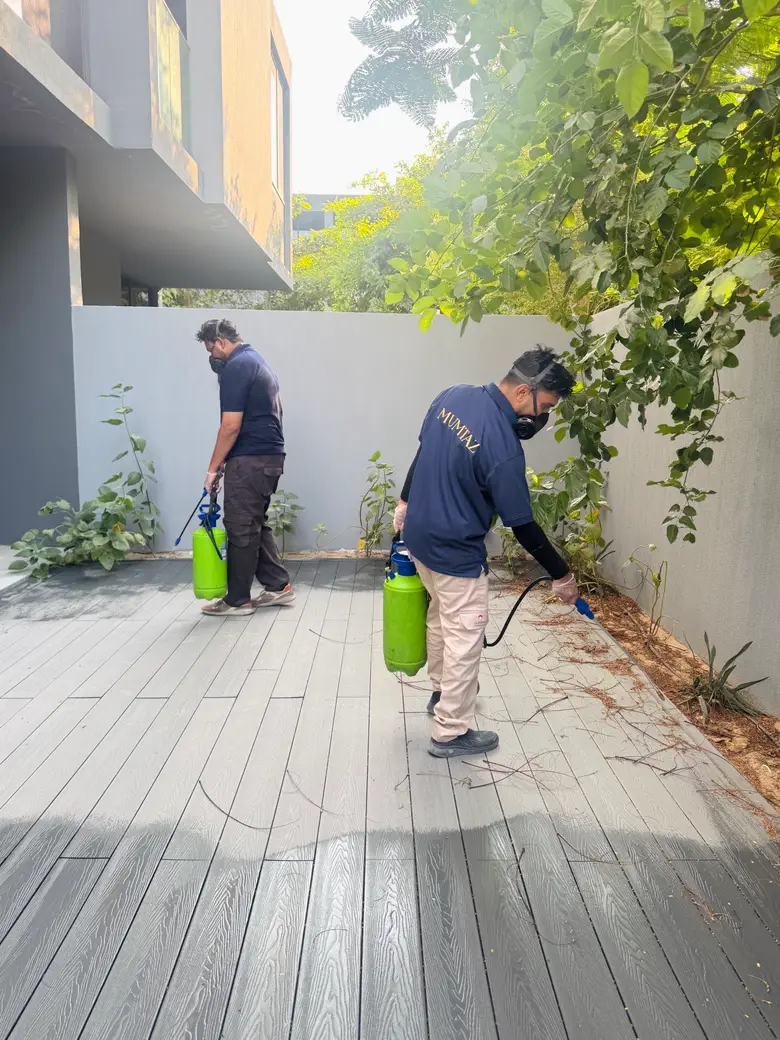
Leaf fall and mulch hold moisture and give insects daytime cover. Along the wall line in the photograph below, dried creepers and litter sit directly on damp sand, which is where we find outdoor cockroaches, spiders and centipedes resting during the day.
Climbing plants trained on walls and facades act as a bridge. They give crawling insects a dry route from the soil to terraces, balconies and upper window frames, bypassing the treated ground.
Decking, pool decks and paving joints
Composite decking sits on a frame with a dark void underneath. Irrigation run-off and cleaning water collect there, and nothing disturbs it, so it becomes a sheltered nest site right next to the living room doors.
Pools add splash water, warm pump rooms and lighting. Lights by the pool and behind glass facades draw flying insects at night, and spiders and other predators follow them onto the house walls.

Drains and service chambers
Floor drains, gully traps, irrigation valve boxes and inspection chambers connect every home to the community drainage network. Cockroaches live in that network and come up through any trap that dries out.
The usual entry points are bathrooms nobody uses: the guest bathroom, the maid’s room and the laundry. A trap that has not had water through it for a couple of weeks is an open door.
Construction next door
Masaar is still growing, with later phases under construction. Earthworks break up established ant colonies and cockroach harbourages in the soil, and the displaced insects move to the nearest irrigated, occupied plots. Homes on the edge of a building site often see a jump in activity while the ground works are under way.
The seasonal pattern
Activity rises through spring, stays high in the hot and humid months, and picks up again in October and November as the nights cool and insects that sheltered from the summer heat come back to the surface. Rain, or a burst irrigation line, brings an immediate rise.
What the risk looks like
Our assessment for Masaar homes, based on how the community is built and where insects shelter in irrigated gardens:
| Home | Outdoor pressure | Why |
|---|---|---|
| Townhouse with a small gardenShared walls on two sides; most activity along the front and rear garden walls and in drains. | Moderate | Shared walls on two sides; most activity along the front and rear garden walls and in drains. |
| Villa with a larger gardenLonger wall line, deeper planting beds and more decking to shelter under. | Moderate to high | Longer wall line, deeper planting beds and more decking to shelter under. |
| Villa with a private pool, or backing onto the tree beltPool deck, pump room and night lighting add moisture and shelter; the tree belt supplies insects continuously. | High | Pool deck, pump room and night lighting add moisture and shelter; the tree belt supplies insects continuously. |
Inside the home the risk stays low when the outside is treated on a schedule and drains, door seals and weep holes are looked after.
Why a schedule works better than a single spray
An outdoor residual treatment on the wall line, beds and decking is the barrier that stops most insects reaching the house. In Masaar that barrier is under constant attack: daily irrigation, direct sun and garden work all wear it down over the weeks after a visit.
Renewing it every quarter keeps the barrier in place through the year. Gel bait inside the kitchen and wet areas deals with anything that does get in, and a callback between visits covers the weeks when activity jumps after rain, a leak or nearby construction.
What you can do between visits
- Rake leaf litter and cut stems away from the base of the boundary wall.
- Keep mulch and planting a hand’s width back from the house wall.
- Run irrigation early in the morning rather than in the evening.
- Pour a bucket of water into floor drains in unused bathrooms once a week.
- Trim climbers off the facade and away from window frames.
- Check door sweeps on garden and kitchen doors, and keep weep holes screened.
- Use warm-coloured outdoor lights near the pool and terrace.